One Tradition, Three Shrines
The Kumano Sanzan are the three grand shrines at the heart of the Kumano pilgrimage tradition: Kumano Nachi Taisha, Kumano Hongu Taisha, and Kumano Hayatama Taisha. For a thousand years, pilgrims — emperors and commoners alike — walked the Kumano Kodo trail network across the Kii Peninsula to reach all three. In 2004, UNESCO inscribed the shrines, their associated temples, and the routes between them as “Sacred Sites and Pilgrimage Routes in the Kii Mountain Range.”
Each shrine is anchored to a different landscape: Nachi to a waterfall, Hongu to a river plain deep in the mountains, Hayatama to a river mouth on the coast. That is the point of the pilgrimage — and the problem for a modern visitor with one day. This guide covers what each shrine is, then deals honestly with the logistics.
- Nachi Taisha: Above the 133 m Nachi Falls, near Kii-Katsuura
- Hongu Taisha: Inland at Hongu, Tanabe — near the Oyunohara torii
- Hayatama Taisha: In the coastal city of Shingu
- Connected by: The Kumano Kodo pilgrimage trail network
- UNESCO: Sacred Sites and Pilgrimage Routes in the Kii Mountain Range (2004)
- The catch: The three are hours apart across the Kii Peninsula
The Three Shrines, One by One
Same tradition, very different places.
Kumano Nachi Taisha
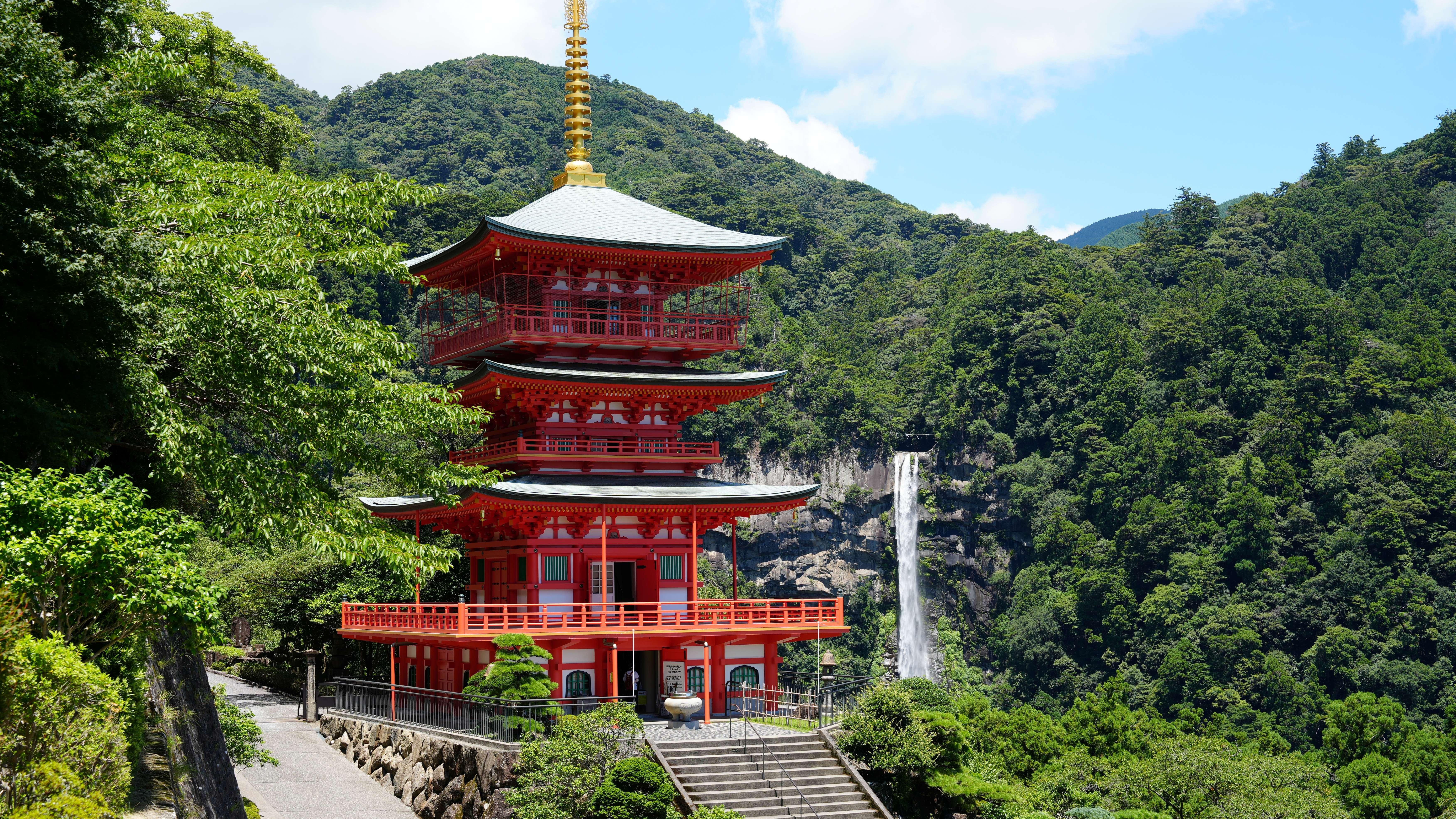
The shrine of the waterfall. Vermilion halls on the mountainside above Nachi Falls — at 133 m Japan’s tallest single drop, and itself the deity of Hirou-jinja at its base. With the Seiganto-ji temple and pagoda next door and the Daimon-zaka walk below, this is the richest single stop of the three — covered in full in the Nachi Taisha guide.
Kumano Hongu Taisha
The shrine of the deep interior, at Hongu in Tanabe — the hub the Nakahechi pilgrimage route leads to. A short walk away stands Oyunohara, the largest torii gate in the world, marking the shrine’s former site on the river plain; the shrine was later moved to its current higher ground. The great gate over the fields is one of the defining images of Kumano.
Kumano Hayatama Taisha
The shrine of the river mouth, in the coastal city of Shingu, where the pilgrimage tradition meets the sea. Vermilion buildings near the mouth of the river, and the most compact visit of the three — pilgrims arriving along the coast reached Kumano here.
The Distances Are Real
On a map of Japan the three shrines look like neighbors. On the ground, they are spread across the Kii Peninsula — Hongu deep inland, Hayatama on the coast at Shingu, Nachi on a mountainside above Kii-Katsuura — with mountain roads and infrequent rural connections between them. Historically, that was the point: pilgrims spent days walking the Kumano Kodo from shrine to shrine.
For a visitor without a car, the honest arithmetic is this: seeing all three grand shrines in one day by public transport is essentially impossible. Trains and buses will get you to any one of them comfortably from the coast, but the Hongu leg in particular eats the day. You have three realistic shapes: stay overnight in the region and take two days; pick one shrine and do it properly; or take the one guided tour whose route is exactly this page’s topic.
The Tour Whose Route Is This Page
One coach day from Osaka: all three grand shrines, the Oyunohara torii, and the Nachi walk.
UNESCO Kumano Kodo: Complete 3 Grand Shrines & Nachi Hike
Full-day coach tour from Osaka with guaranteed departures (solo travelers included) and an in-bus audio guide in English, Chinese, and Japanese, as of mid-2026.
Check AvailabilityThe Route
- Pickup in central Osaka (two locations), then the long ride south — roughly 3.5 hours with a break
- Hongu Taisha and the Oyunohara torii — about 50 minutes
- Nachi block, over two hours: Nachi Taisha, Seiganto-ji, the Daimon-zaka pilgrimage walk, and Hirou-jinja at the base of the falls
- Hayatama Taisha in Shingu — a shorter stop, about 20 minutes
- Return to Osaka
What’s Included
- Round-trip coach transport with a professional driver-guide
- All entrance fees to the shrines, temples, and sites
- Multilingual in-bus audio guide (English, Chinese, Japanese)
- Pilgrimage stamp booklet
- Totsukawa Onsen foot-bath stop, tea, and local snacks
Honest framing: this is a long bus day — around seven hours of the day are spent riding, and the stops are timed, with the shortest at Hayatama. What you buy is completeness: the only way, as of mid-2026, to stand at all three grand shrines and under the Oyunohara torii in a single day without driving yourself. As of our last check, exactly two bookable tours put Nachi Falls on a named itinerary — this one, and a private Wakayama day tour that pairs Nachi with Mount Koya rather than the other two grand shrines ($1,160 per group up to 5, as of mid-2026).
The DIY Alternative: Pick Nachi
If a coach day is not your style, do not try to force all three onto trains and buses — pick the Nachi cluster and do it properly. One mountainside gives you a grand shrine, the Seiganto-ji temple and its pagoda-and-waterfall view, the finest short stretch of pilgrimage trail at Daimon-zaka, and the 133 m falls themselves. That is more variety on foot than either of the other two shrines can offer, and it runs comfortably on public transport from JR Kii-Katsuura — the full train-and-bus plan is in the getting-there guide, and everything on the mountainside is plotted on the Nachi area map.
Kumano Sanzan FAQ
The practical questions, answered without padding.
Kumano Nachi Taisha, on the mountainside above Nachi Falls; Kumano Hongu Taisha, inland at Hongu in Tanabe, near the Oyunohara site; and Kumano Hayatama Taisha, in the coastal city of Shingu. Together they anchor the Kumano pilgrimage tradition and its trail network, the Kumano Kodo.
By public transport, essentially no — the three shrines are spread across the Kii Peninsula, hours apart by train and bus, and connections are infrequent. The realistic one-day option is the guided coach tour from Osaka that covers all three plus the Nachi walk (4.87 from 124 reviews, from $111 per person, as of mid-2026).
Oyunohara is the former site of Kumano Hongu Taisha, a short walk from the shrine’s current location, and it is marked by the largest torii gate in the world. The shrine once stood on this river-plain ground; today the great gate marks where it was. The pilgrimage routes that converge on Hongu are introduced in the Kumano Kodo guide.
Yes. All three grand shrines are part of UNESCO’s Sacred Sites and Pilgrimage Routes in the Kii Mountain Range, listed in 2004. The listing covers the shrines, associated temples such as Seiganto-ji, and the Kumano Kodo pilgrimage routes that connect them.
Nachi. The Nachi cluster gives you the most in one stop: the grand shrine, the Seiganto-ji temple and its pagoda-and-waterfall view, the Daimon-zaka pilgrimage walk, and the 133 m falls themselves — all on one mountainside, reachable by bus from JR Kii-Katsuura station, as the getting-there guide lays out.
Far enough to shape any itinerary: Hongu Taisha sits inland in the mountains of Tanabe, Hayatama Taisha on the coast at Shingu, and Nachi Taisha on the mountainside above Kii-Katsuura. Between any two of them is a serious leg by bus or train — which is why walkers on the Kumano Kodo historically took days to link them. Where the Nachi cluster sits is plotted on the Nachi area map.